


Silver Circle
The Silver Circle honors media professionals who began their careers in television at least 25 years ago, either in a performing, creative, technical or administrative role within the industry or in an area related to television such as TV journalism education, advertising, promotion, and public relations.
Over the course of their 25-year career, they must also have made a significant contribution to the Midsouth Chapter.
The Midsouth Chapter of NATAS has been honoring and celebrating our Silver Circle members since 1994.
Silver Circle Honorees — 1990-1999
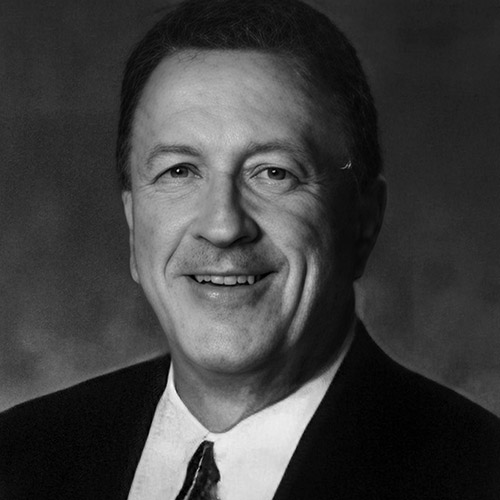
1999
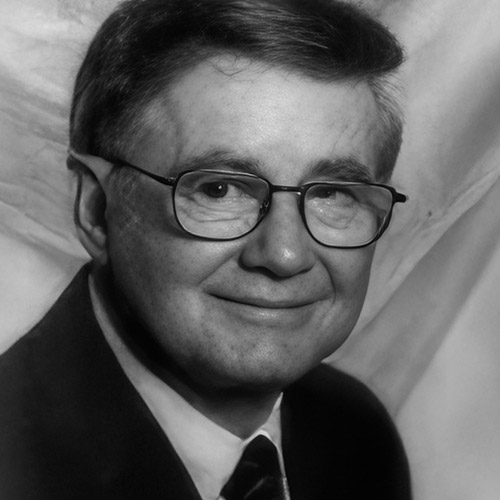
1999
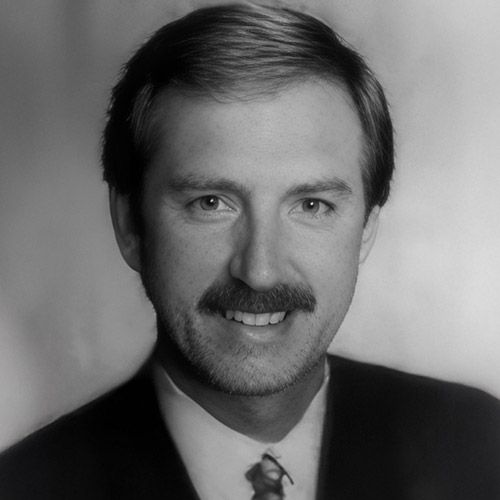
1999
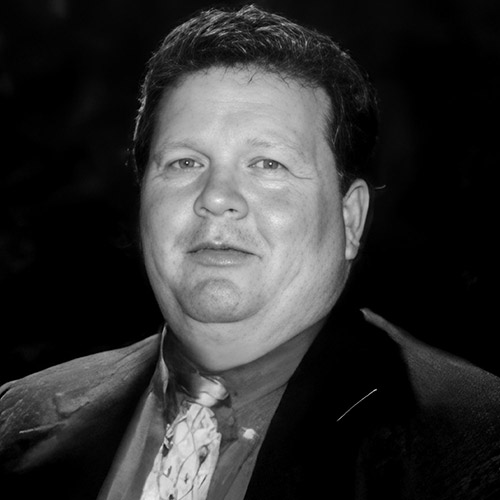
1999
1999
1999
1999
1999

1999
1998
1998
1998

1998
1998
1998
1998
1998
1996
1996
1996
1996
1996
1995
1995
1995
1995
1995
1995
1994
1994
1994
1994
1994
1994
1994
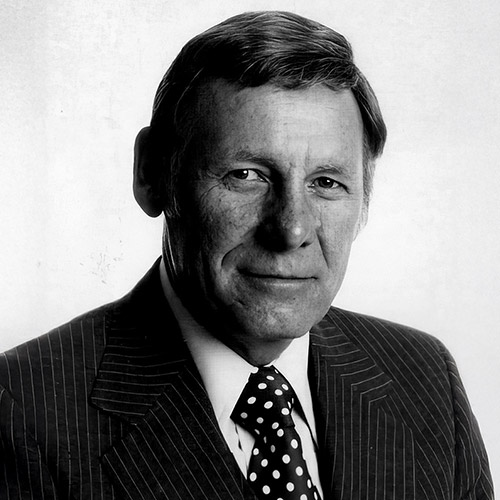
1999 Silver Circle Honoree

C.J. Underwood
A Raleigh native, C.J. majored in journalism at the University of North Carolina at Chapel Hill.
C.J. began his career at the Indianapolis Times, and moved on to WLWI-TV and WISH-TV. He joined the news department of WBT-WBTV in 1967. He was morning news anchor, sports anchor, weather reporter, movie reviewer, movie host, commentator, commercial spokesperson, live show host, and consumer advocate.
His chief talent and favorite thing to do, however, was chat with and interview people — a discovery he made when he originated the human interest feature Carolina Camera in 1970. He went on to produce more than one thousand stories during several different stints as host of that popular segment of the news. He said the series was a highlight of his career because it allowed him to concentrate on writing, a professional joy.
During the ’80s, C.J. became a favorite lunchtime companion for area viewers on the variety program Top O’ the Day. He served as co-anchor of WBTV News at Noon and WBTV News Saturday Morning. C.J. also produced a weekly series, Thanks to Teachers, which highlighted outstanding teachers nominated by viewers.
After being diagnosed with cancer, C.J. waged a two-year battle and discussed his illness and recovery in a series of reports called C.J.’s Journal. He retired on June 15, 1999, to concentrate his energy on his fight against cancer. C.J. said goodbye to viewers from the same place he had spoken to them for more than 30 years — a Channel 3 newscast.
1999 Silver Circle Honoree
Charlie Orr
Charlie’s broadcasting career began in radio when, as a high school student, he became a weekend announcer and disc jockey at WMCP in Columbia, Tennessee. He later took a job at WDXE in Lawrenceburg, before joining the still relatively young world of television at WLAC-TV (now WTVF), in 1967. He started, and has remained, in the engineering and operations areas.
Upon his arrival, Charlie began making his mark in television. He was a part of the elite engineering team that developed one of the nation’s first live remote ENG unit, dubbed “Project X’’ because of the competitive secrecy involved
During the early years of live remotes at Channel 5, Charlie was the person who literally made them happen. Everyone who works with Charlie is aware of his amazing attention to detail and quick action frequently saves the day. He is also known for turning seemingly impossible obstacles into workable challenges. All this is done with the easy going humility and grace which are Charlie’s trademarks.
Charlie lists his leadership role in organizing live coverage of the 1988 Democratic and Republican Conventions for all the H&C Communications stations as his greatest accomplishment. From both Atlanta and New Orleans, the network Charlie spent a year and a half designing fed live coverage to six stations in virtually every U. S. time zone 24 hours a day, seven days a week.
His colleagues in every department at NewsChannel 5 recognize that without Charlie Orr and his can do attitude, Nashville television would be far less than it is today.
2025 Gold Circle Honoree
1999 Silver Circle Honoree

Bob Mueller
Bob began his broadcasting career at the age of 16, working in the newsroom at KSDK-TV in St. Louis, Missouri.
A St. Louis native. Bob is a graduate of Southern Illinois University in Edwardsville, where he received a B.A. in Fine Arts.
He served as a reporter, producer and anchor for WMDB-TV in Peoria, Illinois. Then he worked for WTVC-TV in Chattanooga, where he was an investigative and state government reporter and anchor.
Bob joined NEWS 2 in 1980 as a field reporter covering the State Capitol. He covered the first space shuttle launch in 1981, and was there when President Jimmy Carter returned to Plains, Georgia, after leaving the White House. Bob was the first reporter to talk with Jimmy Carter about the release of the hostages in Iran. During his nearly 20 years at WKRN, Bob's reporting skills have earned him numerous honors and distinctions. Bob is a four-time Emmy® Award winning journalist and is also a winner of the coveted George Foster Peabody Award for investigative reporting. He also has received awards from the Associated Press, United Press International and the Radio Television News Directors Association (RTNDA).
Bob is also recognized as one of Middle Tennessee’s most active members in helping his community. He has worked in helping feed the hungry with Second Harvest Food Bank for the past 18 years. He serves on their marketing committee for the Boy Scouts, and on the advisory board for the Nashville Mental Illness Organization. Bob has also worked with Vince Gill to raise money through his golf tournament. The Vinny, which has raised nearly 2 million dollars. Three years ago. Bob began hosting his own golf tournament. The Bob Mueller M.S. Celebrity Challenge, which has raised over 100 thousand dollars to fight M.S.
1999 Silver Circle Honoree
Keith Lowhorne
While still in high school in 1972, Keith worked part-time at WHIQ, the public television station, as a stage hand. There he learned the basics of television production, including audio, studio cameras, lighting, and field production. On his first shoot, Keith ran audio for a one-hour documentary on the Old Time Fiddlers Convention in Athens, Alabama, which won an award.
In addition to his degree from the University of Alabama, Keith graduated from the National Press Photographers Association School at the University of Oklahoma.
In 1973, Keith joined WHNT as a studio camera operator. He also placed letters on a spaghetti board to identify people on the news - the forerunner of Chyron, and processed 35mm slides for production and sales.
Keith became WHNT’s first full-time news photographer in 1974, shooting 16mm film with an Aurichon Sound Camera and Bolex, and processed and edited the film for newscasts. In 1976, Keith was promoted to chief photographer. He managed the switchover from film to ENG in 1979, and saw the department increase to seven full time photographers. Keith also helped in the building and design of the station’s first live truck.
Following stints as assignment editor, director of photography, and news assignment manager, Keith was named director of station operations and facilities. His considerable experience led him to such challenges as cable retransmission, license renewal, and the conversion to digital television.
Keith has received numerous awards, including several UPI, AP and Huntsville Ad Club honors. He serves on the boards of the Land Trust of Tennessee Valley and the National Children’s Advocacy Center.
1999 Silver Circle Honoree
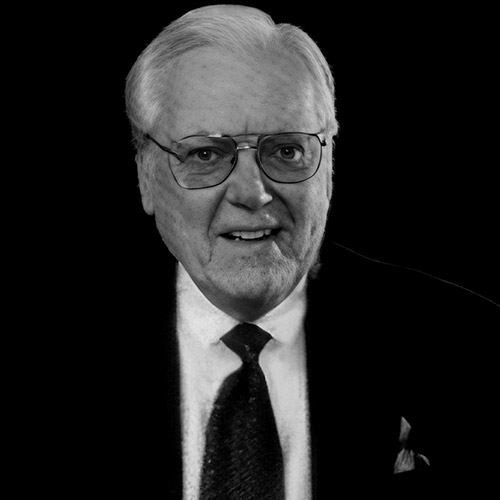
Dick Hawley
Dick and Jack are the first team to be inducted into Silver Circle, recognizing the contribution they made together. They helped make television the powerful and compelling force we know today.
Richard Dick Hawley was born and grew up in Brooklyn, New York. He served as a navigator in the Air Force in World War II. After discharge, ex-lieutenant Hawley learned of a radio opening way down in Bluefield, West Virginia. He took a chance - auditioned and jumped into his first job in broadcasting.
Next he moved to the leading station in Birmingham, Alabama. There he worked in both radio and the brand-new television. In 1951, Dick moved to the WMC stations in Memphis, and became the area’s best known personality as the anchor and weathercaster on the daily news broadcasts.
You know what?, he says, There wasn’t a day in all those broadcasting days that I didn’t look forward to coming to work. I loved it! And Midsouth television viewers looked forward to seeing him at work. They loved him!
1999 Silver Circle Honoree
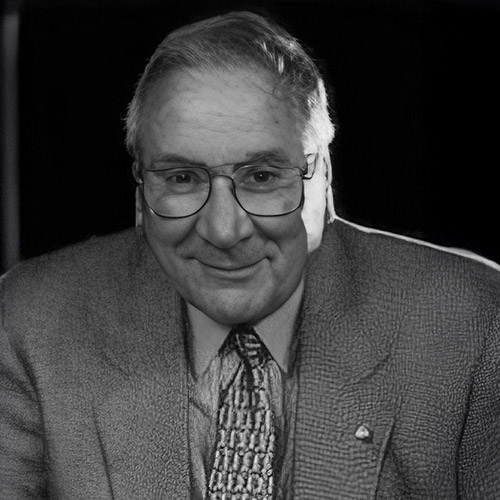
Jack Eaton
Dick and Jack are the first team to be inducted into Silver Circle, recognizing the contribution they made together. They helped make television the powerful and compelling force we know today.
Jack Eaton is also an Air Force veteran. Jack is from Warren, Pennsylvania. And like Dick, found his life’s work down South. While in the service, he delivered sports news over the Armed Forces radio station in Puerto Rico. After discharge - now bitten by the broadcasting bug - he went to Syracuse University to study broadcasting. After graduation he joined a Columbus, Georgia, station’s sports department.
Then he moved to the WMC stations in Memphis in 1956. He served as sports anchor on WMC-TV and did play-by-play on WMC Radio
Now retired. Jack does part-time radio sports talk, writes poetry, and follows the Pittsburgh Pirates and the Memphis Tigers.
1999 Silver Circle Honoree
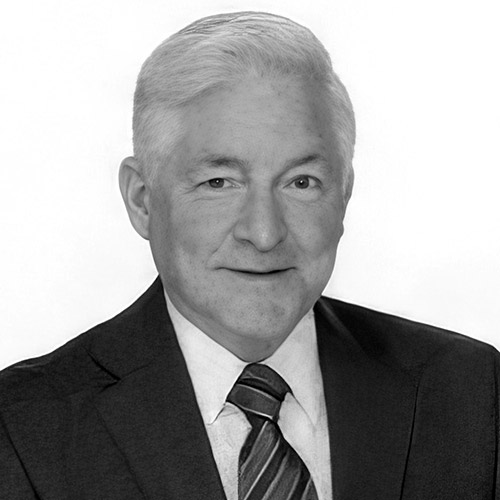
Don Dare
A U. S. Army veteran, Don served as an officer in the Signal Corps. He worked for the Television Division of American Forces Radio and Television at Ft. Gordon, Georgia in 1969-70, and served with them in Vietnam from 1971-72. Don was awarded the Bronze Star, Joint Service Commendation Medal, and Army Commendation Medal.
Don holds a degree in theatre-speech from Wesleyan College and earned a Master of Arts degree in journalism from the University of Georgia in 1974. He has taught journalism, speech, and broadcast courses at the University of Tennessee at Nashville and at Moorpark College in California.
He began his television news career with WLAC (now WTVF) in Nashville in 1973. In 1976, he moved to WCKT (now WSVN) in Miami, and in 1979 went to KSDK in St. Louis.
It was on to Los Angeles in 1983 for the syndicated daily news program Newscope, and N.I.W.S., a weekly nationally syndicated news program. In 1985, Don returned to Miami where he worked at WSVN and WFOR.
He moved to WATE in Knoxville in 1996, and is consumer reporter and co-anchor of News at 5.
Don has won several national journalism awards, including the Gabriel, National Press Club’s Consumer Award, San Francisco State’s Broadcast Media Award, two Freedom Foundation Awards, and two Arthritis Foundation Cecil Awards. His regional awards include the RTNDA Munow Award, the Emmy®, Missouri Broadcasters Association Investigative Reporting, Florida School Bell, Tennessee Associated Press, and Florida Associated Press.
In Knoxville, Don has been recognized for investigative, documentary and feature reporting in the Golden Press Card competition of the Society of Professional Journalists.
1999 Silver Circle Honoree
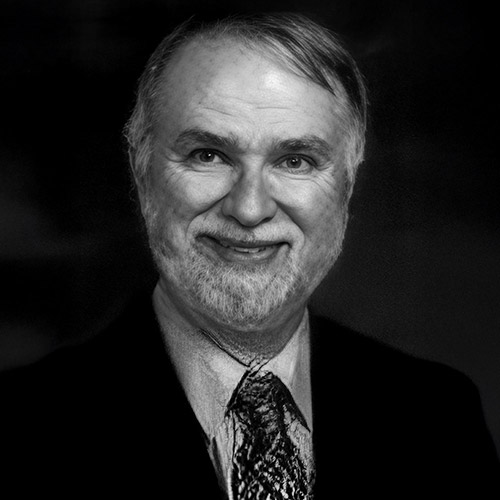
Gary Conrad
For 28 years, Gary has reported news stories accurately, produced top-rated newscasts seen by millions of viewers, and taught the tools of the trade to dozens of young reporters and producers.
Gary earned his degree in Speech/Communication in 1970 from North Carolina State University, and was the first graduate in what was then a new area of study. He began his career at WSOC in 1971 as a radio newscaster, then learned how to shoot film and became a television news reporter.
In 1973, Gary was named producer of the 11 p.m. newscast, and brought WSOC their first number-one rating in May. He produced the top-rated 11 p.m. newscast during 11 sweeps in seven years. One of his newscasts was the first in America to use a Soviet satellite to televise a live news report, which was Billy Graham’s first crusade in Moscow.
As a reporter, he covered two national political conventions, and the entire political arena - even royalty when Princess Grace of Monaco visited a textile mill in South Carolina.
In 1989, Gary was named producer of three franchise segments which aired during the early evening newscast, and in 1991 became WSOC’s first copy editor. He was named senior writer in 1998, and also serves as awards and intern coordinator.
Under his supervision, WSOC has won 295 awards. Of those, 48 were national awards including Sigma Delta Chi, National Headliner and Unity awards, and 6 regional Edward R. Murrow awards. Personally, Gary has received two Emmy® nominations, a School Bell merit citation, and an honorable mention from the Council for Advancement and Support of Education. He also served as ethics and freedom-of-information coordinator for the midCarolinas chapter of the Society of Professional Journalists, and conducted seminars on media ethics for high school teachers.
1999 Silver Circle Honoree
Bob Bomar
In the words of Jim Melchiorre, who nominated Bob, It’s a safe bet that every news photographer or news reporter who has worked in Middle Tennessee since the Eisenhower Administration can tell a Bob Bomar story. His ability to sense where a news story was and to get his camera there is legendary.
While still at George Peabody College for Teachers in 1951, Bob worked nights in the WKDA radio news department, checking wire machines for stories. After graduation, he became a production cameraman and news photographer at WLAC (now WTVF). In 1957, he joined the ArnoldEngineering Development Center where he shot and edited film of classified jet engines and military hardware research for the space program. From 1969-71, Bob was the audio-visual specialist for the Tennessee Game and Fish Commission, and produced a weekly radio show for 100 stations.
Bob returned to television in 1971 as a news photographer/editor at WSMV and spent nearly twenty years there. While still at WSMV, Bob spent five years giving media classes at the Tennessee Law Enforcement Academy.
From 1990-94, he continued his television news career at WKRN, on call 24 hours a day, and responding to most situations alone.
In 1994, with over forty years of news gathering under his belt. Bob continued his work with the Tennessee Law Enforcement Training Academy, giving police officers training in video techniques.
He is a legendary newsman, skilled technician, and held in high regard by everyone who knows what true journalism means.
1998 Silver Circle Honoree
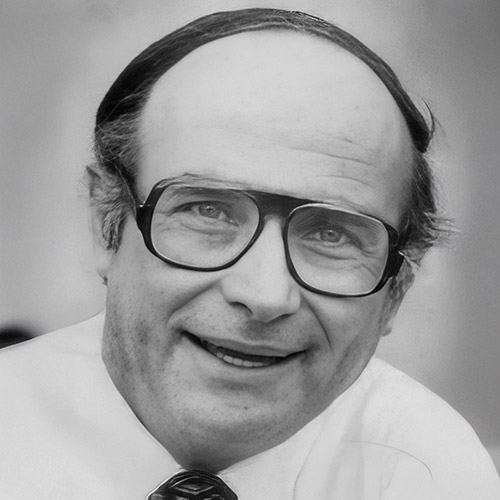
Bernie Mintz
Bernie was born in Chicago in 1936, and moved to St. Paul, Minnesota in 1947, He became interested in photography when he received a camera on his 13th birthday. He moved again to Lincoln, Nebraska, and served on the yearbook staff at Lincoln High School. Majoring in journalism at the University of Nebraska, Bernie got a part-time job on the photo staff of the Lincoln-Journal Star.
An assignment to take photos at KUON, the educational station at the university, inspired him to change his major to broadcast journalism, and volunteer at the television station. Bernie finished his education at Memphis State University and joined the photography department at WKNO. He became director of the department and produced and directed educational programs.
In 1966, Bernie joined WMC as a news photographer. During that turbulent time, Memphis became a focal point and symbol of the Civil Rights Movement—from school integration, to the strike of primarily black city workers—unrest and tension permeated the entire 4-state WMC coverage area. News became a delicate and dangerous activity. Bernie was a front-line soldier, moving from crisis to crisis to capture those moments with his Bell and Howell 16mm camera. He was there that night in April, 30 years ago, when the sniper’s bullet ended the life, but not the dream, of Martin Luther King. Bernie’s photographic images helped the Midsouth and the nation to understand the depth of despair and frustration felt by minority citizens.
After almost 20 years as a WMC news photographer, Bernie took over the assignment desk. Then in 1996, he returned to the downtown beat to gather and research news stories.
1998 Silver Circle Honoree
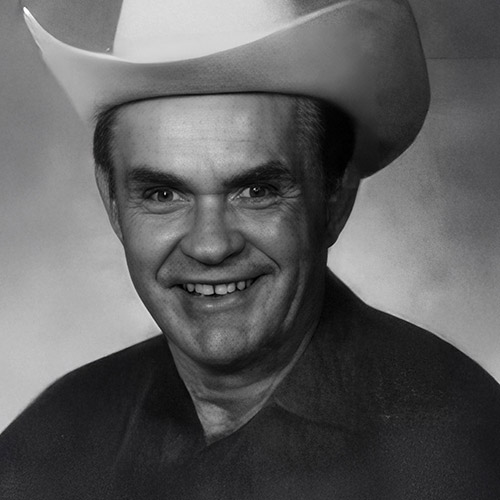
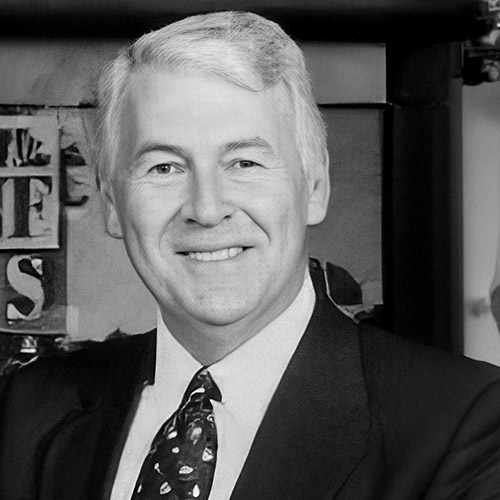
Fred Kirby
Remembered as one of the last singing cowboys, Fred Kirby was one of the inventors of television in the South. He was a key figure in many facets of programming until the time of his death in 1996, at the age of 85.
Fred became a radio star on WBT in his teenage years, long before the days of television. After ten years on WBT, Fred worked at radio stations in Philadelphia, Cincinnati, Chicago and finally St. Louis, where he was proclaimed the Victory Cowboy, and was honored for selling millions of dollars of war bonds, raising money for the Red Cross, the March ofDimes, and entertaining at Army and Navy hospitals. In addition to being a singer, musician, and DJ, Fred composed nearly 600 songs for MGM, including a million seller, Atomic Power and The Old Country Preacher.
In 1945, he guest-starred in a motion picture, Kentucky Jubilee, and made his television debut at Constitution Hall in Washington, DC. Fred was a TV star before most Americans ever heard of the new medium.
When Fred was invited to ride in President Harry Truman's inaugural parade in 1949, Maryland's Oxen Hills Saddle Club gave him a horse. Calico, which he then called all his horses.
Fred's reputation as a helper of handicapped children was spreading, and about a year before television came to Charlotte, he organized a children's radio show called Tiny Town USA, which had some 90,000 listeners. This concern for children showed in his volunteer activities, including his song writing. He wrote God Bless the Little Children, and dedicated it to the Shriners Hospitals all over the country.
Fred's WBTV television career began in 1951, when Junior Rancho premiered, followed by Little Rascals, Looneytune Jamboree, Ricochet Round-Up and Whistlestop, earning him the title of the longest-running children's show host in America.
Dressed in his colorful red shirt with white fringe, packing his Colt 45's and singing and playing his guitar, Fred was the subject of adoration of thousands of children for more than six decades.
1998 Silver Circle Honoree
Thomas H. Kennemer
Tom Kennemer began his television career in 1968 at WHNT, Huntsville as a salesman/intern. He moved into news in 1969, first working as a photographer and black and white developer, and then became a reporter. In 1971, Tom began anchoring the 10 p.m. sports, and moved to anchoring the 6 and 10 p.m. newscasts in 1974. In 1981, he moved across town to WAFF as anchor.
The highlights of Tom's career follow the history of the Alabama. He covered the inaugural Talledega 500 NASCAR race in 1969, reported on and helped photograph President Nixon's visit to Birmingham in the early 7O's, photographed an interview with civil rights leader Reverend Ralph David Abernathy, and interviewed and photographed Coach Bear Bryant and Bob Hope at the Inaugural Alabama Sports Hall of Fame banquet. Tom was reporter and photographer during the devastating tornadoes that struck North Alabama in April, 1974, and anchored newscasts following the Huntsville tornado in November, 1989.
In 1994, Tom hosted and helped produce From the Valley to the Moon, documenting the role NASA's Marshall Space Center in Huntsville played in putting a man on the moon, which was named Best Documentary by the Alabama Associated Press. The program has been placed in the library of the Museum ofBroadcasting and Communications in Chicago. Tom's other awards include four-time Best Anchor of the Year from The Alabama Associated Press, Huntsville Press Club Achievement in Journalism, Toastmasters International Communication and Leadership Award, and Snead State Community College Alumnus of the Year.
1998 Silver Circle Honoree
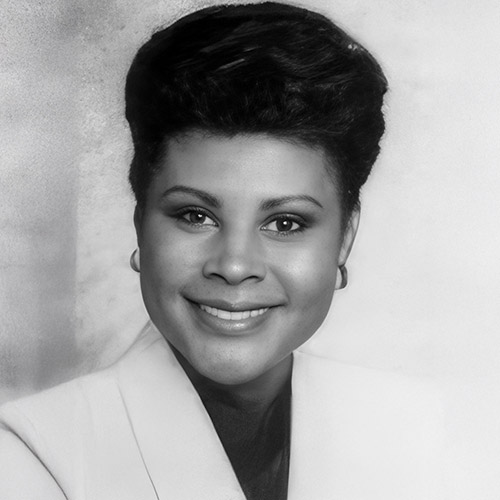
Anne Holt
Anne Holt was one of 13 children, growing up the daughter of a Tennessee sharecropper. She received her education from the University of Tennessee and immediately went to work for WATE, Knoxville. Anne moved to WKRN, Nashville in 1976 as weekend anchor. In 1980, she became primary anchor of the evening newscasts.
In addition to her anchor duties, Anne serves as a spokesperson for News 2's Food to Families campaign. In 1993, a sorting room at the Second Harvest Food Bank was named after her to reflect Anne's 10 years of dedication to helping feed hungry families in Middle Tennessee. Anne is also a regular speaker at charity, civic, and school functions. She has served on the boards of the Girl Scouts, the March of Dimes, INROADS/Nashville, Inc., and the Honorary Leadership Committee for the Chamber of Commerce's Partnership 2000, and serves on the board of Book ’Em, an organization which encourages children to read, and the University ofTennessee College of Communications Board of Visitors.
An award-winning journalist, Anne received the coveted George Foster Peabody Award for the investigative documentary Under the Influence. She has also won three regional Emmy® Awards, countless honors from UPI, American Women in Radio and TV, several colleges and universities, and has been named Outstanding Woman of the Year. In 1994, she was awarded the Jerry Thompson Communicator's Lifetime Achievement Award from the National Council ofChristians and Jews. Anne was also honored that year with the Donald G. Hileman Distinguished Alumni Award from the University of Tennessee College of Communications.
Anne's proudest accomplishment is the Distinguished Service Award from the Tennessee Association of Broadcasters. She received this honor based on her contributions to WKRN, the community, and the well being of others. Along with the Award, Anne also earns the distinction of being the first woman, the first African-American, and the first news anchor to receive this honor.
1998 Silver Circle Honoree
Chuck Hemerick
Chuck Hemrick began his career in 1953 at WTOB, WinstonSalem. He went on to WSJS, Winston-Salem, WFGA, Jacksonville, WSOC, Charlotte, WBTV, Charlotte, and WGHP, High Point. He worked many years as a news photographer, until a serious shoulder injury prevented him from lifting a camera. Since then he was been a videotape editor for WGHP.
Chuck filmed his first story for NBC News in 1967 for the Huntley-Brinkley Report. While at WFGA, Chuck did live shots for NBC News correspondent, Roy Neal, at Cape Canaveral in the early days of the space program.
The Blue Ridge Views series he shot, edited and produced for WGHP for two years needed no narration. His feel and love for the mountains ofNorth Carolina, the people who live there and their music, was the basic theme of the series. Each piece in the series was accepted by the National Archives in Washington, and are available for use by public television stations.
Chuck has won two Radio Television News Directors Association of the Carolinas awards for best documentaries.
When he retires in three years. Chuck will have devoted 48 years to television broadcasting.
1998 Silver Circle Honoree
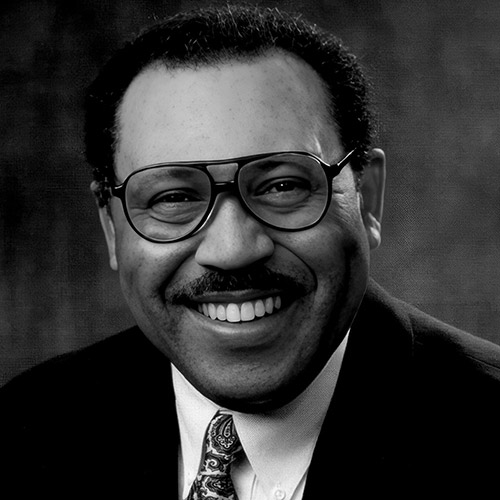
Bill Hall
Bill Hall began his broadcasting career in Atlanta and joined WSMV in 1974 as a staff announcer. With his easy-going personality, Bill got his big break in 1976 doing the weekend weather with future Entertainment Tonight anchor John Tesh.
In 1977, Bill was promoted to weekday weather at 6 and 10 p.m.
Although he hasn't changed much in his 25 years at WSMV, weather technology has. Today, satellites, doppler radar, and powerful computers are his everyday tools. Even with his sophisticated Skymax weather radar system. Bill has an uncanny knack for turning that complicated weather data into easy-to-understand graphics and forecasts. Bill has spent many nights in his weather office following storms and letting viewers know if they are in danger. In winter storms, the Snowbird Report lists school and business closings. Bill's famous Sunshine Award recognizing viewers on special anniversaries and birthdays, as well as his personal travel forecasts and personal weather requests, have endeared him to viewers.
Bill's versatility reaches to his Backyard gardening segments, and Backburner recipe segments. He has also written a best-selling cookbook for the American Diabetes Association. An avid outdoorsman, Bill also hosts Land and Lakes, a weekly show on fishing, hunting, cooking and enjoying life.
Bill's commitment to community service is constant-from participating in charity fund raisers to serving as Grand Marshal of parades. He works with the Cheatham County DARE program, talking to kids about the dangers of drug use, is actively involved in the Middle Tennessee United Way, and The American Diabetes Association.
Bill was recently recognized as Man of the Year by the National Council ofChristians and Jews, and has won three regional Emmy® Awards.
1998 Silver Circle Honoree
Cullen Ferguson
Cullen Ferguson's face and voice have been a part ofWSOC-TV for more than 28 years, becoming an anchor/reporter in 1982. He co-anchors Eyewitness News Daybreak, which is one of the highest rated local morning newscasts in the nation.
In 1970, Cullen became the first consumer reporter on Charlotte television. For 10 years he solved consumer complaints against merchants, and his name became a household word. His accomplishments include an expose of home improvement fraud that resulted in the arrest and conviction of a Charlotte home improvement contractor on mail fraud charges. His track record helped establish the Action 9 feature, which continues to this day.
After a decade of consumer reporting, Cullen turned to investigative reporting. In 1981 he co-reported a 20-part series that exposed the environmental dangers posed by illegal dumping of hazardous waste in the hauling and storage of nuclear and chemical waste in the Carolinas.
He won the North Carolina Association of Educators' School Bell Award in 1985 for a series of reports on school bus safety.
Cullen has also been active in community affairs. He has served as president of the board of directors of the Travelers Aid Society, as a member of the board of directors of Time Out Youth (a support organization for gay and lesbian youth), and as an elder for First Presbyterian and South Mecklenberg Presbyterian churches in Charlotte.
1998 Silver Circle Honoree
Dic Condra
From the time Richard Dic Condra was born in 1930, he was itching to go to work. Before his 12th birthday he had a job running errands, a paper route and a job in a grocery store.
By the time he was a teenager. Dic became entranced by the Golden Age of Radio, taking a job as a deejay at WLAY radio, he hosted a show called Turn Table Two. During the 1950s, he became a radioman of a different sort—aboard the USS Snowden. After the war. Dic came back home to Alabama. It was there something new caught his eye. Pictures... in a box ... television. The first TV signal he saw was from an NBC affiliate 140 miles away in Memphis at WMCT. By December 1955, Dic accepted a job as an engineer at the station, where he worked until his retirement in June of this year.
For Dic Condra, almost 20 of his 42 'A years at WMC were spent on the open road. Along with his partner J.C. Clayton, Dic built and operated a series of WMC live remote news and production trucks. Known as the Color Cruiser and the Travelin' Televan, Dic literally pioneered the creation of remote production trucks. For years, virtually every network in the country used the services of WMC because of the remote unit's reputation for top-quality sound and pictures.
Twenty years on the road meant literally millions of miles and hundreds of seat-of-your pants set-ups. From Mexican musical shows, to college football and basketball games to beauty pageants; if it was live TV in America, there was always a good chance it was coming through Dic Condra.
One of the most historically significant events Dic covered was the inauguration of President Richard Nixon. ABC News hired the truck and the network assigned a promising young correspondent from London to be live from the WMC truck. The reporter's name? Peter Jennings.
For parts of five decades. Dic made WMC AM/FM & TV a part of his family. His wife Norma and daughters Jan and Lauri were kind enough to share him with WMC.
1998 Silver Circle Honoree
Larry Brinton
Larry is senior investigative reporter and producer of the popular Street Talk segment for WTVF NewsChannel 5, and co-host of MorningLine on NewsChannel 5+.
But he makes no bones about how his career as Nashville's premier investigative reporter started. They hired me because I could type, he says of his early days in the newsroom at the Nashville Banner. He was paid $50 a week to write obits. Through the years Larry advanced from reporter to editor to managing editor of the Banner before joining WTVF.
Larry's unbending standards and his penchant for digging into stories are legendary. His journalistic accomplishments include an expose on the questionable business practices of some of Middle Tennessee's largest charitable organizations. NBC News featured Larry's investigation in the network documentary Giving and Getting: The Charity Business. His own documentary and news series work at NewsChannel 5 has entailed an undercover investigation of illegal wildcat coal mining in Tennessee, uncovering evidence of a Criminal Courtjudge taking bribes, and bringing a police pilot to the ground for stealing fuel and aircraft parts from the police hangar. In many cases, Larry's investigations were the basis for official criminal investigations.
Books and articles written about reporting feature Lany's work. Author John Behrens wrote that Larry is among the top 20 investigative reporters in the country. The producers of Marie: A True Story asked him to play the role of himself in the film as a direct result of his extensive reporting on the paroles for cash scandal that brought down Tennessee's governor during the late 1970's.
Larry's awards include the Radio and Television News Directors Association, the Society of Professional Journalists in Atlanta, the Tennessee Associated Press, and a Pulitzer nomination.
The reason Larry draws so much personal satisfaction from investigative reporting is reflected in something he tells his friends and colleagues. He says at his funeral the coffin will remain closed -just so some of the people he's covered over the years will always wonder just a little…
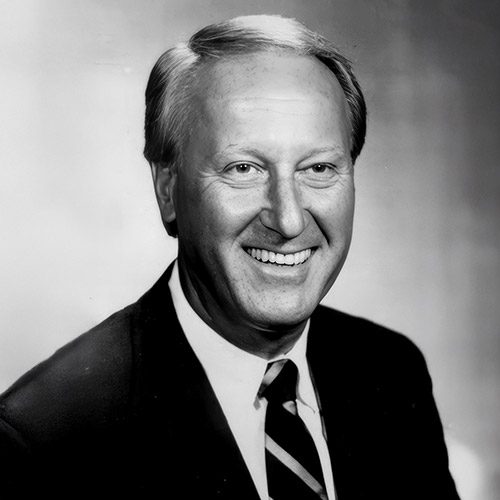
1996 Silver Circle Honoree
Robert Stoldal
Bob credits his first journalistic stirrings to his grandfather, who took him to see newsreels at a San Francisco moviehouse, and to his school librarian, who taught him how to research. When he moved to Las Vegas in 1958, he became student school librarian. The first time he saw his name in print was in a local newspaper article about the school librarian. His first job was at the Review Journal, and then in 1961 he became a disc jockey at KLAS radio. By 1967 Bob was doing sports for WSHO-TV, and moved to KLAS-TV in 1968 as anchor-reporter on The Big News.
Now Bob has been a television news director for more than a quarter century. Until four years ago, he headed the news operation at Landmark’s KLAS, the CBS affiliate in Las Vegas. When Landmark purchased WTVF, Bob came to Music City as news director of Nashville’s CBS station.
First in Las Vegas, and now in Nashville, Bob has proven himself to be a leader of the people who work for him and a leader in the community. The Governor of Nevada appointed him to that state’s Historical Commission because of his interest and work in the study and preservation of history in Nevada. This work includes authoring a book focusing on Las Vegas in the early 1920’s.
While he takes his work and the development of his people seriously. Bob has led a colorful life in the broadcast news industry. At one point, he worked for Howard Hughes, and while he never met the eccentric billionaire, he often responded to questions raised by Hughes through a Hughes aide.
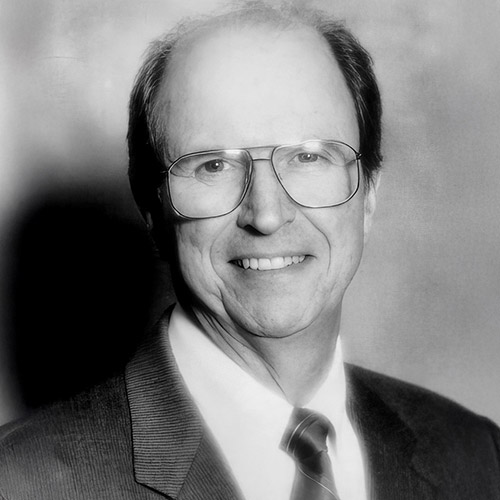
1996 Silver Circle Honoree
Clyde G. Payne
A 36-year veteran, Clyde launched his broadcasting career in 1960 as a news reporter at KXJB-TV in Fargo, North Dakota. In 1964, he went to WHTI-TV, Fargo, North Dakota as production director, then became operations manager, sales manager, and station manager.
He joined WBKO-TV, Bowling Green, in 1970. He became president and part owner in 1976. Following the sale of the station to Benedek Broadcasting Corporation in 1983, he assumed the title of divisional vice president and general manager of WBKO.
Clyde serves on the board of directors of the National Association of Broadcasters. He was a member of the ABC Television Affiliates Association from 1985-1990, and was president and chairman of the board in 1989-1990. He continues to serve on the Past Chairman’s Committee. He also served on the Arbitron Television Advisory Council from 1984-1993 and served as chairman in 1989.
His community service includes serving as president of the Bowling Green-Warren County Chamber of Commerce, Bowling Green city commissioner, president of the Bowling Green Kiwanis Club, director of the United Way of Bowling Green Warren County, secretary, chairman and board member of Bowling Green Municipal Utilities, and member of the board of trustees of HCA/Greenview Hospital. He is a director of the National City Bank, and member of the Broadcast Advisory Council of Western Kentucky University
Under his leadership, WKBO is known as a training ground for aspiring artists within broadcasting.
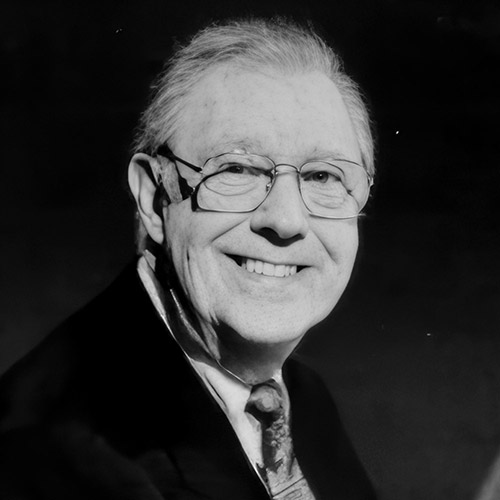
1996 Silver Circle Honoree
Loonis McGlohon
Looms’ early career included playing with big bands like Jimmy Dorsey, accompanying Judy Garland, then forming his own trio. It was with the trio that he first came to national attention, performing on the legendary radio series American Popular Songs. Looms is one of the true television pioneers—appearing live on WBTV in 1949 when they first went on the air as musical director, talent and producer of the daily show. Nocturne.
He has performed all over the world with notable appearances in Rome, Singapore, London, Tokyo, Monte Carlo, and most recently for royalty at Glamis Castle in Scotland. Here in America, Looms has been a frequent performer at Carnegie Hall, Lincoln Center, and The Smithsonian.
Looms is also a well-known composer, whose songs have been recorded by Frank Sinatra, Rosemary Clooney, Cleo Laine, Woody Herman, George Shearing, Eileen Farrell, and the London Philharmonic Orchestra. His original songs appear in an anthology, 150 Most Beautiful Songs Ever Written, and have been translated in several foreign languages.
At WBTV in the early years. Looms met his longtime friend, Charles Kuralt, who credits Looms with giving him the encouragement he needed early in his career. Later, Looms wrote and recorded the theme for Kuralt’s highly acclaimed series On The Road.
His television credits include the documentaries Songs of the Soul and What’s It Like Being Septima Clark?, and the shows A Christmas Holiday, Easter in the Holy Land, North Carolina Is My Home, WBTV Salutes North Carolina Artists, and Bach in Our Own Back Yard.
This year, WTVI, Charlotte, produced Loonis and His Good OldFriends, recalling his career.
Loonis’ contributions extend beyond music to the community. He organized and developed the first North Carolina chapter of Big Brothers and Big Sisters of America, built two city parks, raised more than a hundred thousand dollars for drought relief, and served on dozens of boards and commissions.
His awards include two coveted Peabody Awards, National Headliners Award, Gabriel Award, two Iris Awards. North Carolina Composer of the Year, The North Carolina Award, and two honorary doctorates.
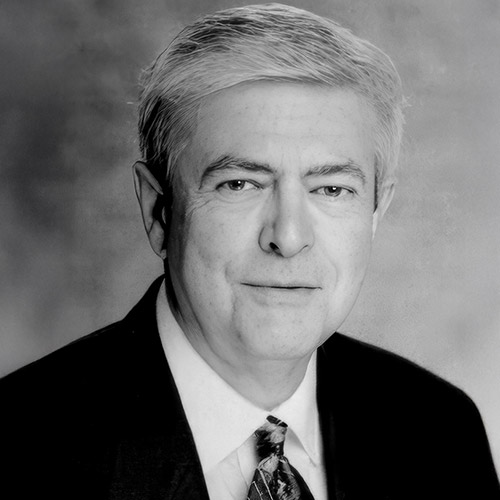
1996 Silver Circle Honoree
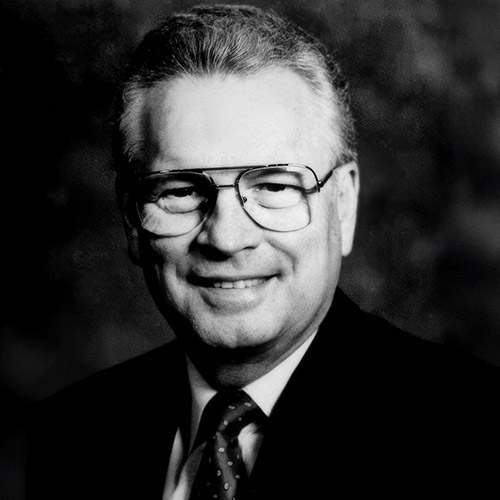
Lee William Kinard Jr.
A pioneer of breakfast television, Lee founded the Good Morning Show which has been on the air continuously for 39 years. He serves as executive producer and host of Good Morning, the top-rated local morning program in the market. In November, 1995, the show was fourth highest rated in the country among affiliates in the top 50 markets. In addition, Lee is co-anchor of News 2 at 6 PM.
Lee’s career began at WABZ, Albemarle, in 1949, where he became part owner and program director. In 1956 he moved to WFMY, and began the morning show the next year.
In 1979, Lee took a crew to Holland to discover a different culture. That venture led to a series of cultural specials spanning 17 years and more than 20 countries, including China, the former Soviet Union, Egypt, Thailand and Estonia.
Clearly, education has played a major role as Lee attended Pfeiffer College in the 4O’s, but went on to receive degrees from the University of North Carolina—a B.A. in 1974 and an M.A. in 1976, capped by the Ed.D. in 1988. His teaching career began as lecturer in the Broadcast Cinema Division of the Department of Communication and Theatre at the University of North Carolina, teaching Radio and TV News Production and Radio-TV Announcing, and he went on to become an Assistant Professor of Journalism.
His honors include 6 School Bell Awards, the Distinguished Alumni Award from both the University of North Carolina and Pfeiffer College, Rotary International’s Paul Harris Fellow, National Conference of Christians and Jews Brotherhood Award, Greensboro Chamber of Commerce Edward R. Murrow Award, and the United Way of Greater Greensboro Alexis de Tocqueville Award.
As a pioneer broadcaster, Lee has been generous in passing along his knowledge and skills to the next generation. Those fortunate enough to work with, or learn from him, are among the many in broadcasting who have benefited from association with this pacesetter.
1996 Silver Circle Honoree
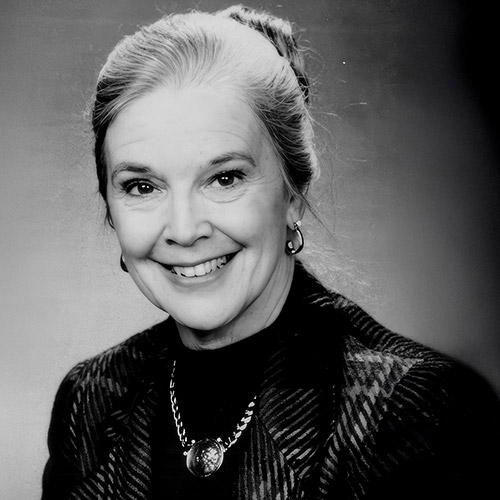
Jane Dowden Grams
Jane is vice president of Opryland USA, and general manager of the Gaylord Syndicom Entertainment Group (Gaylord Syndicom, Gaylord Program Services, Inc., and Gaylord Production Company, Inc.).
She is a 46-year veteran of the television and entertainment business with over 10 years experience in each of four major industries—media advertising, television station management, television program production, and television syndication.
Jane began her career at WGAP radio in Maryville, Tennessee, in 1950 and joined WSM-TV (now WSMV) in 1951. In 1956, Jane became vice president for media of Noble-Dury and Associates in Nashville and was recognized as one of the outstanding media buyers in the south.
In 1965, she helped establish and became president of Showbiz, Inc., a pioneer in the field of syndicated country music television programs. Showbiz developed many country music shows such as The Porter Wagoner Show, The Wilburn Brothers Show, Jim Ed Brown’s Country Place, The Bobby Goldsboro Show, Pop Goes the Country and Nashville on the Road. At one time she was described as the General Motors of country music television.
Jane left Showbiz in 1975 to become president and general manager of WTVC, Chattanooga. She was the first woman general manager of a network affiliated TV station in the United States. She served four years on the ABC affiliates board of directors (another first in the industry).
She joined Opryland USA as vice president in June 1984 and has served as general manager of the syndication and communications division, Gaylord Syndicom, since that time.
1996 Silver Circle Honoree
Fred Blackman
Fred began his television career in 1959 at WTVD, Durham, North Carolina, as a weathercaster. At the same time he hosted a television dance party. He rounded out his career in those early days with a plethora of commercials. Two years later he moved to the anchor position on the 6 PM news.
In 1969, Fred moved to WGHP as anchor of the 6 and anchor/producer of the 11 PM news. Two years later, while still anchoring, he was appointed news director, a position he held for five years.
Considered one of the best news writers in the business, Fred remembers a time when a newscast consisted of only five minutes out of a fifteen minute show (ten minutes were given to weather and sports). There was no film, no tape, only a desk for the newsman, and he would have to vacate that during the break to allow the sports guy to sit down. There was a hod out in the studio that held a batch of sepia-toned pictures which would serve as the video for that night’s news. The director would cut from the anchor to the camera focused on the picture, then back to the newscaster while a floorman quickly removed the top picture to reveal the next, just in time for a quick re-focus and another take. The voice of the newsman continued—deep, full and authoritative—informing an almost mesmerized audience of the state of the world that night.
Fred, a television warrior with 37 years experience, is still at his news desk.
1996 Silver Circle Honoree
Larry R. Bearden
Larry has been in broadcasting since 1961 when he left the Air Force and joined WSM-TV (now WSMV) in Nashville as a staff engineer. He soon distinguished himself and was put in charge of getting Nashville’s first color cameras on the air in 1966 at WSM. From that moment on, Nashville viewers were treated to the best color pictures that the state of the art at that time would permit. He became widely known and respected, not only for operating the color cameras, but also maintaining and enhancing them.
In the early 1970’s Larry was instrumental in the design of, and equipment selection for, the new Opryland Productions teleproduction facilities located in the Grand Ole Opryhouse. Beginning with coverage of the dedication of the Opryhouse by President Nixon in 1974, Opryland Productions became known for its high standards and exceptional quality. A partial list of the talent he has worked with includes Perry Como, Dolly Parton, Tina Turner, Ann-Margret, Marty Robbins, Johnny Cash, and Chet Atkins.
Larry returned to WSM-TV in 1977 as assistant chief engineer until 1983, when he joined the Caluger Video Group as vice president. During his eleven years there, he amassed impressive credits including projects for Cinemax, ABC, CBS, NBC, PBS, Bob Hope Enterprises, Dick Clark Productions, The Family Channel, Billy Graham and the Italian Television Network. His show credits, too numerous to list, include Del Reeves’ Country Carnival, Flatt & Scruggs Show, Bobby Lord Show, Porter Wagoner Show, Wilburn Brothers Show, Jim Ed Brown Show, Pop Goes the Country, That Nashville Music, Marty Robbins Show, Dolly, Hee Haw, Music Hall America, Celebrate the Miracles, The Moscow State Circus, Master Series Concert with Lyle Lovett, Bobby Bare Show, Conway Twitty on the Mississippi, In Concert, Loretta and Crystal Going Home, June Jam, Hallmark Hall of Fame, and the CMA Awards.
In 1995, he went to TNN: The Nashville Network, bringing thirty-five years of contributions not only to the industry, but to all the individuals who have been privileged to work with him.
1995 Silver Circle Honoree
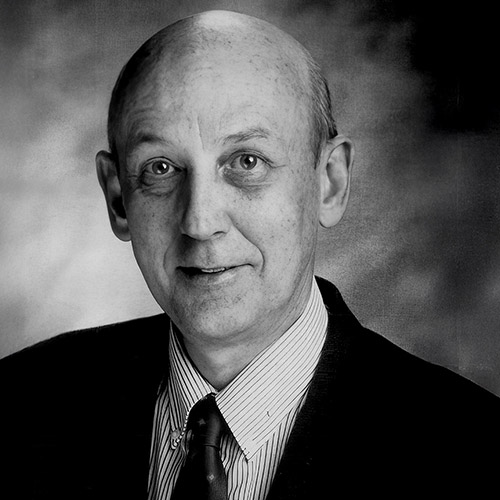
Richard M. Wright
Dick is in his 34th year of television broadcasting, all within the borders of Alabama. His career has included positions as floor crew, director, engineering liaison, stage manager, producer and manager of promotion, programming and operations. Today he is vice president/operations manager.
Born in Columbus, Ohio, Dick graduated from Murphy High School in Mobile, then attended the University of Alabama and worked at the Alabama Educational Television Network.
At WKRG, Mobile, he started on the stage crew and became a director. At WFSA, Montgomery, Dick started as a projectionist and became promotion manager. While at WFSA he produced and edited The Three Days in May coverage and printed piece on the death of Lurleen B. Wallace, governor of the State of Alabama. Dick was also on the film crew and chief editor of the acclaimed Auburn Football Review.
He has been at WHNT since 1974 where he started as promotion manager, and became operations manager, production manager, program manager, and finally vice president. He served as executive producer of The Wrong Show, a fundraiser for the Leukemia Society of Huntsville. He was also five-time producer/director of the annual Addy Awards for the Huntsville Advertising Federation.
In 1986-87, he was site manager for the construction of WHNT’s new 30,000 square foot state-of-the-art broadcast facility, affectionately known as Dick’s Baby.
Dick is a past board member of the Broadcasters Promotion Association (currently BPME), and co-chairman of the 1976 BPA convention at the Opryland Hotel with 1,400 in attendance from five countries. He also served on the board of the Alabama A&M University Cluster, and was president of both the Alabama Broadcasters Association and the Salvation Army in Huntsville.
He currently serves on the boards of the Arts Council of Huntsville, the Broadway Theatre League, 4-H for Madison County, SCAN (Stop Child Abuse Now), the Salvation Army, and is chairman of the Monte Sano United Methodist Church administrative board.
Dick’s many awards include AP and UPI, Huntsville Advertising Federation Silver Medal, and numerous Addy Awards. He received the only BPA/Michigan State University award ever given to an Alabama broadcaster, and was named Alabama Broadcaster of the Year in 1992.
1995 Silver Circle Honoree
Bill Williams
Fresh out of college in 1957, Bill Williams took a job as an announcer at KCRC Radio in Enid, Oklahoma. It was his plan to spend time at the radio station until he could land a real job. That real job never came along, because Bill fell in love with broadcasting.
He spent 11 years in radio, with stints at KMAM, Butler, Missouri, and WKY, Oklahoma City, before moving into television.
His first television job was with KRCG, Jefferson City, Missouri, where he was host of a daily live children’s show, and moved on to KYTV, Springfield, Missouri, as weekend anchor, reporter and announcer, later becoming prime anchor and news director.
He started at WBIR, Knoxville, in 1977 as anchor. By 1979 the news ratings had grown from respectable second to first place and have maintained that position since.
Bill is known throughout East Tennessee for his handling of the news and his compassion in dealing with human issues. In 1980 he began his Monday’s Child segments, profiling special needs adoptable children—492 of those children have been placed in adoptive homes. He is also host for the local portion of the Children’s MiracleNetwork broadcast, and has been instrumental in raising more than 5 million dollars for the local children’s hospital over 12 years.
In 1985 he testified before the U.S. House Select Committee on Hunger concerning poverty and hunger in rural Appalachia. In 1993 he was honored in a joint resolution by the Tennessee General Assembly for his work with Monday’s Child. Bill serves on numerous boards and is in demand as a public speaker, appearing more than a hundred times a year before community, church and school groups.
Among his many awards are the Silver Gavel, the Community Service Award from the Tennessee Medical Association, the Public Service Award from the Tennessee Association of School Psychologists, and numerous Tennessee Associated Press Broadcasters Association for journalistic excellence. In 1994 he was named in a poll of readers by the Knoxville News Sentinel as best local television personality, and in 1995 was named best local news anchor by Metro Pulse.

1995 Silver Circle Honoree
Robert L. Shepherd
In 1965, just after celebrating his 32nd birthday, Bob was appointed general manager of WDCN. He was one of the youngest public television station managers in the United States at the time—if not the youngest.
With a degree in radio and television and business administration from the University of Alabama, Bob began his career as production manager at WEDU, Tampa-St.Petersburg. He joined WDCN in 1963 as program-production manager.
It was through his initiative that the Nashville Public Television Council was created in 1974. NPTC was established to assist the licensee (the Metropolitan Board of Public Education of Davidson County-Nashville) in the operation of WDCN, particularly in the areas of public relations, business affairs and fund raising. As of June 30, 1995 the NTPC has raised a total of $32,644,845, over 70% of which has come from the private sector.
Bob was the principal negotiator for the licensee in the multi-million dollar channel swap between WDCN, public Channel 2, and WNGE (now WKRN), the commercial ABC affiliated Channel 8. It took three and one-quarter years to complete the exchange, which took place in December of 1973.
Under his leadership building space has increased by a factor of five, and station operating revenues are more than 16 times greater. In 1974-1977 a new 55,000 square foot telecommunications center was designed and constructed, which was nominated for Station of the Year by Broadcast Management/Engineering magazine, and came in second in the national competition. WDCN broadcast its first color transmission in December 1967, and converted to full color in July 1974. It began Closed Captioning for the hearing impaired in March 1980, multi-channel stereo in 1986, and Descriptive Video Service for the visually impaired in 1994.
Bob has served on the boards of Public Broadcasting Service, Tennessee Broadcasting Council and National Association of Educational Broadcasters. Presently, he is executive vice president of the Nashville Public Television Council, and serves on the board of the Southern Educational Communications Association (past treasurer, vice chairman, and chairman), Tennessee Public Television Council. He was a founding governor of the Nashville Chapter of The National Academy of Television Arts and Sciences, and has served as treasurer since 1992.
1995 Silver Circle Honoree
Evelyn Keller
Evelyn Keller is the first woman to be inducted into the Silver Circle. Throughout her 27-year career at WKRN Nashville, she has served the station with distinction while simultaneously blazing a trail for women in television.
She joined WKRN’s news division in 1967 as public affairs program coordinator, which was followed by stints in promotion, programming and production. Her production work included Bozo and Romper Room. Occasionally, the former fashion model would fill in as Romper Room guest host.
In 1970 Evelyn was named assistant promotion director while continuing her work in programming and production. She continued to shoulder two jobs and Initiate a lifelong devotion to community service with her 1975 promotion to program coordinator and community service coordinator. In 1982 she was named programming manager, and remained program manager until 1991, when she became manager of community affairs.
Evelyn’s greatest contribution to Nashville has been through the station’s Food 2 Families project which benefits Second Harvest Food Bank. When initiated in 1984, the project generated 15,000 pounds of food—ten years later that figure has grown to 650,000 pounds distributed to thousands of Middle Tennessee families. WKRN received the Emmy® Award for community station project for Evelyn’s work on the program.
Her other contributions include producing the live telecast of the News 2 Christmas Parade for the past 14 years, the Ronald McDonald telecast to raise money for Ronald McDonald House, and the Kids 2 Kids weekly educational PSA’s throughout the school year.
Evelyn has served on the boards of Ronald McDonald House, the McNeilly Center for Children, Leukemia Society and was a founding board member of the Communications Arts Council, which promotes quality in children’s programming. She was a charter member of American Women in Radio and Television.
She currently serves on the board of directors of the National Conference of Christians and Jews, the advisory board ofRonald McDonald House, and the communications committee of the Nashville Area Chamber of Commerce.
1995 Silver Circle Honoree
Hope Hines
As sports director for WTVF, Nashville, Hope goes behind the scenes interpreting the trends for fans of all sports, and interviewing the full spectrum of sports personalities.
After graduation from the University of Georgia, Hope joined WLAC (now WTVF) in Nashville. He covered the Masters golf tournament from 1971-75, and interviewed all the great players, including Jack Nicklaus, Arnold Palmer, Gary Player and Lee Trevino. In 1974 he covered the Muhammad Ali/George Foreman heavyweight championship fight in Zaire, Africa.
In 1975, he moved to sports director for KFMB, San Diego, and was also the radio play-by-play announcer for the National Football League’s San Diego Chargers in 1976. During this time he also became friends with Ray Kroc, owner and founder of McDonald’s, who owned the San Diego Padres. He was the New Orleans Saints’ television play-by-play announcer at WWL, New Orleans in 1977.
Hope then spent two years as news anchor at WCTV, Tallahassee, followed by sports director at WPCQ, Charlotte. While in Charlotte he became friends with NASCAR stock car driver Dale Earnhardt early in his racing career. Earnhardt is now seventime Winston Cup champion.
From 1979-1982, he was sports anchor and sports magazine host at WMAR, Baltimore. While at WMAR, he worked with such legends as former Baltimore Oriole third baseman Brooks Robinson, and former Baltimore Colts quarterback Johnny Unitas. Hope travelled to Puerto Rico in 1981 to cover winter major league baseball, and covered the Muhammad Ali/Larry Holmes heavyweight championship fight in Las Vegas in 1982.
Hope returned to WTVF, Nashville, in 1983 as sports director, and has covered the Daytona 500 for ten years. Other recent highlights include the World Series in 1992 and 1993, Superbowl XXIV in New Orleans and the women’s Final Four basketball tournament in Atlanta.
He has won three Emmy® Awards, the IRIS for best sports program in the nation, and was named best sportscaster in the Southeast by the National Association of Sportscasters.
1995 Silver Circle Honoree
Tom Griscom
As president of the Gaylord Communications Group, Tom’s division includes TNN; The Nashville Network, CMT, Z Music, three television stations, four radio stations, and Gaylord Syndicom, a television syndication company.
He began his career with WSM, Inc., in 1951 as a sales assistant with WSM-TV, Nashville’s first television station. He subsequently became an account executive for the station, and then the sales manager in 1958. Tom was the station’s general manager and a vice president of WSM, Inc. from 1968-1978.
In 1978, Tom was appointed Opryland USA, Inc., senior vice president of broadcasting, and became president of the Gaylord Communications Group in 1994.
A Nashville native, he earned his bachelor’s degree from Vanderbilt University. Tom is a founder and past president of the Nashville Better Business Bureau and has served on the board of governors of the Nashville Area Chamber of Commerce. He is past president of the Nashville Advertising Federation and has served on that organization’s board of directors. He was awarded the NAF’s Printer’s Ink Silver Medal for outstanding service to the community and to advertising.
In addition to his continuing 45-year broadcasting career, Tom is an internationally renowned sculptor.
1995 Silver Circle Honoree
Ed Greaney
In Ed’s own words... I figured that ifI stalled long enough someone would come along and invent a whole new industry that would take me in and offer fun, excitement, variety, challenge and—possibly—some financial reward. Television came to Memphis on December 11, 1948 with WMCT. And, like everyone else, I watched the little movie in the box through the appliance store window, and was drawn like a moth to the flame.
In February 1949, Ed was hired for $40 a week as a floor man to cue performers, flip show title cards, move props, and mop up after the Man’s Best Friend show. Through diligence, study and the fact that someone quit for another job, he became a producer/director for, kids shows, daily devotional, country-western, news, weather and wrestling. Ed’s next assignment was production manager and then in 1962, he became program manager.
By 1972, Ed took over the news operation and became assistant general manager of news and public affairs, a role which lasted until his 1989 retirement. Scripps Howard, however, asked him to stay on to produce shows, file vintage footage, and tell war stories. In December 1983, when Ellis Communications Company became owner of WMC, he was asked to produce the daily Wake Up Call broadcast from 6 to 7 a.m.
Ed Greaney is still in television after 46 years.
1995 Silver Circle Honoree
Jack Callaghan
During his career, Jack has been host of a children’s show, the voice of a puppet, sports anchor, weathercaster, news anchor, program director, the station’s editorial voice and station manager/vice president.
After graduation from the University of Miami in 1953 and two years in the Army’s first TV production unit. Jack joined WLWD, Dayton, as host of a morning children’s show and afternoon talk show. When he left, he was replaced by Phil Donahue.
He was hired shortly after WSOC signed on the air in 1957. In the early days he was Captain Jack, hosting Popeye and His Friends, and was the voice of many characters, including Punchy the Rabbit on Joey the Clown. Jack was paralyzed with polio in 1960, but a special hookup allowed him to continue to voice his characters from his hospital bed.
For a while Jack was the Shell weatherman on the II pm newscast and filled in for the sports director. He anchored the 6 and 11 pm newscasts from 1970-1976. For most of that time he was also working in several management roles, including program director, and became station manager in 1974.
Jack served on the board of NATPE from 1970-1973. He was vice president of television for the North Carolina Association of Broadcasters in 1978, and was inducted into their Hall of Fame in 1994.
He is currently national chairman of the board of the Easter Seal Society. His community projects have included national chairman of the Disaster and Health Services for the American Red Cross, chair of the bond campaign for the Spirit Square arts center and Discovery Place science museum, serving on the board of the Mint Museum, Charlotte Opera, United Way, Goodwill Industries, and Charlotte Choral Society. Jack has been a member of the Charlotte Hospital Authority, the Mecklenburg Council on Adolescent Pregnancy, the Afro-American Cultural Center, and even served for two years on the Boxing and Wrestling Commission.
His awards include Sigma Delta Chi’s Public Service Award in Journalism, the North Carolina Easter Seal Citizen of the Year, Women in Communications Ace Award, Charlotte Ad Club Silver Medal, and the Goodwill Industries’ Cornerstone Award. One wing of the Goodwill Industries Building in Charlotte is named in his honor.
Jack retired from WSOC in April 1995, after 38 years of service.
1994 Silver Circle Honoree
Bill Walker
After graduation from the University of North Carolina at Chapel Hill, with a degree in radio-television and political science, Bill Walker joined WSOC, Charlotte, North Carolina, in 1968 as a reporter.
Now managing editor and anchor of the 5, 5:30, 6 and 11 PM newscasts, his career has been extraordinary. He has covered seven national political conventions, interviewed President Gerald Ford in the Oval Office, and covered Pope John Paul IPs visit to South Carolina. Bill has reported live from England twice — on North Carolina's 400th Anniversary and on the daily transatlantic flights from Charlotte to London.
He has also reported live from Frankfurt, Germany on the dismantling of the Berlin Wall concurrent with Lufthansa flights from Charlotte, and traveled to Japan for a series of reports on the culture. He went to Egypt in 1988 to cover the life and artifacts of Ramesses the Great in preparation for the exhibit in Charlotte.
Bill’s list of awards — too long to list here — includes five best newscast awards from AP, and three from UPI, highlighted by UPI’s best newscast in the nation in 1983. He has also won three awards for best mini-documentary from the South CarolinaAssociated Press, the North Carolina Associated Press and the Radio Television News Directors Association of the Carolinas.
His outstanding community service includes awards by the Foster Parents Association, and the School Bell Award. He is a volunteer for the Mental Health Association, the Council for Children, Charlotte Speech and Hearing Center, and Cities in Schools.
He and his wife, Eva, have two sons, and he is a deacon at Myers Park Baptist Church in Charlotte. Bill’s weekend hobby is cooking.
1994 Silver Circle Honoree
Jim Stanley
Jim Stanley has been in broadcasting in Nashville, Tennessee, over 30 years, as Art Director at WSIX (WKRN), and WDCN before going to WSM (WSMV). After 14 years at WSM he moved to TNN: The Nashville Network in 1982.
Involved in all aspects of set design and construction for TNN, he also serves as art director for outside projects. His credits include the President’s Gala at Ford’s Theatre in Washington for ABC, the Johnny Mathis Special for WNET, the ASCAP Awards, Farm Aid, the International Aerobics Championship, the National Arthritis Telethon, President’s Economic Summit, Midsouth Emmy® Awards, NBC’s Today Show, Dick Clark Productions, the Chinese Symphony Orchestra Special for the China Central Television Network in Beijing, Crook & Chase, CMA Preview, Hee Haw, A Tribute to Lawrence Welk, the Statler Brothers’ Show, Dove Awards, Music City News Songwriters’ Awards, International Motorsports Hall of Fame Awards, TNN Music City News Country Awards, and Fan Fair, among others.
Jim heads the largest set construction department in Tennessee. He is involved from start to finish on most of his projects. His imprint is evident from the initial pencil sketches to the installation of the set on the stage. Sixty hour weeks are common for Jim, and people taking weekend tours of the Grand Ole Opry are likely to see him at his drafting board. Over the years Jim has earned the respect of America’s top television producers and directors who have come to depend on his creativity and thoroughness.
1994 Silver Circle Honoree
Aaron Shelton
Inspired by an oatmeal box radio, Aaron Shelton launched a life-long career in broadcasting at WSM radio, Nashville, Tennessee, in 1928.
Still with WSM, he began branching out shortly after World War II when he, with George Reynolds and Carl Jenkins, formed Nashville’s first recording company — Castle Recording Laboratory. One of their first sessions was for Fred Rose, who in turn introduced them to Hank Williams. The rest is history, including Aaron’s recording engineer gold record for Your Cheatin’ Heart.
The branching out continued in 1948 when, at the urging of NBC to get in on the ground floor of a new venture called television, Aaron applied for a construction permit for Channel 4. In the spring of 1950 construction began on Nashville’s first television station. The bold endeavor included establishing a network link between Louisville and Nashville, and on September 30,1950, at 1:10 PM, WSM-TV launched Nashville’s first local television broadcast.
The sale of TV sets shot up following the first live basketball game — Vanderbilt at Kentucky on March 3,1951. Another first was the telecast of the inauguration of Frank G. Clement as Governor, a landmark event in those days, forecasting the news-gathering ability of the new medium.
His branching out continued with the new Grand Ole Opry House and the Opryland USA theme park.
From 1928 until his retirement in 1975, Aaron was instrumental in bringing television to Nashville, country music to the world, and laying the ground work for a variety of mass communications.
1994 Silver Circle Honoree
Ralph L. Hucaby
Ralph Hucaby graduated from the University of Kentucky Engineering School in 1943. He worked at the University of Kentucky Radio Studios and at WLAP in Lexington, Kentucky as early as 1941. He then went to RCA to work in their Products Design Engineering Section.
After being stationed in Manila during World War 11, he rejoined RCA, and worked on the design of television products equipment and commercial television stations. This phase of his work at RCA also included some of the early developments in the field of color television.
From RCA, he came to WLAC-TV (now WTVF), Nashville, Tennessee in 1953 as Technical Director, where he designed the initial studio and transmitter facilities and supervised their construction. The first broadcast from WLAC was on August 6,1954. Ralph also designed and supervised the construction of WTVF’s present studio facilities on James Robertson Parkway.
October 14,1974, however, was a landmark day in Ralph’s career, and for television in Nashville. It was on that day that Nashville and the middle Tennessee area were introduced to the concept of instantaneous live news coverage. Having worked for many months in secret on the plan known as Project X to most Channel 5 employees, Ralph and his development team built the first Electronic News Gathering (ENG) vans in the country for use by a station not owned by one of the three broadcast networks. This extraordinary achievement changed Film at 10 to Live Action Cam, enabling news crews to set up and be on the air in a matter of minutes — something that is so commonplace today that most of us take it for granted.
The concepts Ralph developed and implemented in the original ENG vans are still in use today in systems all over the world. After Channel 5 introduced its first ENG vans and system, many other stations came to Nashville to see this new technology and patterned their own ENG systems after the very successful design that Ralph and his team had implemented.
Ralph was elected a Fellow in the Society of Motion Picture and Television Engineers in 1971. He is a member of Tau Beta Pi (Engineering Honor Society) and Sigma Pi Sigma (Physics Honor Society).
1994 Silver Circle Honoree
Charlie Gaddy
Charlie Gaddy’s 36-year broadcasting career began in 1958 as an NBC page in Washington, D.C. He also served as assistant director and announcer with NBC, where he worked on The Huntley-Brinkley Report, covering stories including Krushchev’s 1959 visit to the United States. He returned to North Carolina in 1960 as a staff announcer at WPTF radio.
Charlie returned to TV broadcasting in 1970 when he joined WRAL, Raleigh, North Carolina, as Director of Public Affairs. He became anchor and producer for the station’s early morning newscast in 1972, and primary anchor for the 6 PM newscast in 1974.
He anchored WRAL’s first international live satellite telecast from Plymouth, England, commemorating the 400th anniversary of the first English voyages to the New World. His assignments have taken him to China, Honduras, London, and to Saudi Arabia to cover the deployment of Ft. Bragg troops in the Gulf War. Most recently, Frank traveled with North Carolina veterans to Normandy, providing live coverage of D-Day 50th anniversary events.
His numerous awards include two UPI honors, the 1984 Radio Television News Directors Association of the Carolinas Best Documentary, the Iris for Fisherman of England, and the UPI Best in the Nation for news coverage of the 1988 tornado. He received the Edward R. Murrow Award for the documentary Troubled Waters, and the 1992 Midsouth Emmy® for News Excellence.
Charlie is chairman of the Board of Trustees of Methodist College and has served on the Board of Directors for the Cued Speech Center in Raleigh, and as Alumni Board President for Guilford College. He has received numerous awards and accolades for his service to the community. Most recently. United Cerebral Palsy announced that they will begin the construction of the Charlie Gaddy Children’s Developmental Center as a tribute to Gaddy’s 25 years of work with clients of cerebral palsy.
1994 Silver Circle Honoree
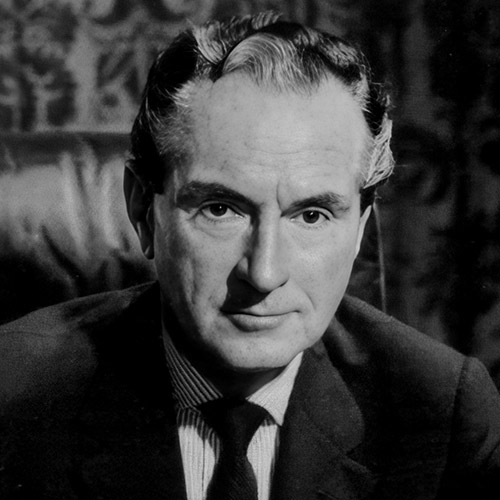
Guilford Dudley Jr.
Presently Chairman and CEO of International Financial Services, Ltd., Guilford Dudley is former Chairman and CEO of Life and Casualty Insurance Company of Tennessee and Worldwide Insurance Company of London, England. He served on the board of American General Corporation of Houston until being appointed United States Ambassador to Denmark, where he served with distinction, receiving the highest diplomatic award, the Grand Cross of the Donnebrog from King Frederick IX. Attaining the rank of Lieutenant Commander as a Naval Aviator in World War II, he received a Presidential citation and a citation from Admiral Halsey as Air Operations Officer on the USS San Jacinto.
Associated with Life and Casualty since 1931, and anticipating the move into television while serving as President of WLAC radio, Nashville, Tennessee, he declared that the same high standards that have always been maintained in radio station WLAC will also be maintained in the case of WLAC-TV (WTVF).
To launch the television station, executives of Life and Casualty signed a two-year contract with Columbia Broadcasting System. The transmitter, building, tower and antenna were constructed in the summer of 1953. The first floor of the Life and Casualty Building on Fourth Avenue North was remodeled for studio and office space.
In 1954, Channel 5, with Guilford Dudley as President, was launched, serving 41 Tennessee counties and 21 southwestern Kentucky counties, and promised the innovation of color television on August 22, with plans to carry Ed Sullivan’s Toast of the Town in tint TV.
He now serves on the boards of Third National Bank, Financial Securities Advisers, Inc., American Progressive Corporation, and the Board of Trust of Vanderbilt University and Ensworth School.
1994 Silver Circle Honoree
Frank Deal
Frank Deal’s career began not in television, but in theater. He spent the first half of the 1950’s with professional acting companies in New York, Virginia and North Carolina. That background served him well in his first television job at WCYB, Bristol, Virginia. There Frank provided what he calls completely costumed comedy weather reports and hosted Looney Tunes, a live children’s show during which he flew out over the audience with the help of hidden wires.
Frank moved to WKBW, Buffalo, New York, where he was master of ceremonies and announcer for Time to Polka, as well as co-producer, performer and puppeteer on Popeye and His Pals, in the role of First Mate Lanky Frank.
As talk show host, celebrity interviewer, and — always — weatherman, Frank worked his way through stints at WGR, Buffalo, WJRT, Flint, Michigan, and WXON, Detroit, to WGHP in High Point, North Carolina.
After 25 years as senior meteorologist, Frank still provides the market’s most trusted word on the weather. Though he handles three newscasts a day, he has hosted the station’s telethon to benefit United Cerebral Palsy for 17 years. Frank’s efforts have helped raised over a million dollars for UCP.
And Frank finds time for two more of his passions; writing and North Carolina’s mountains. His two recent prime-time specials. Blue Ridge Views and Winter’s Tale, brought the beauty of the Appalachians home to viewers. His upcoming special, Theater under the Stars with Frank Deal will tell the story of North Carolina’s outdoor dramas, focusing on one of the state’s longest running productions. Unto These Hills — the same show in which a young actor named Frank Deal first played a role in the summer of 1951.
1994 Silver Circle Honoree
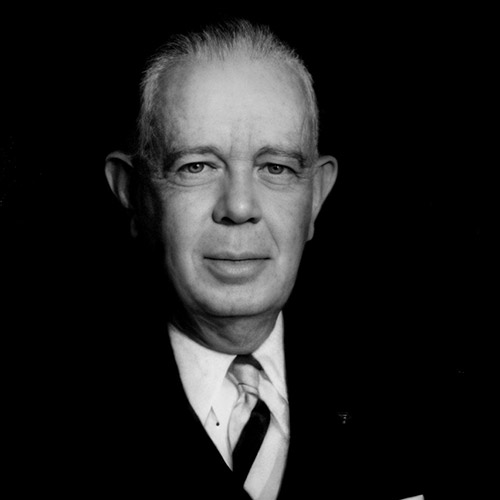
Edwin Wilson Craig
Nineteen sixty-two marked Edwin Craig’s 50th year of service to National Life of Tennessee with ceremonies at the Ryman Auditorium, home of the Grand Ole Opry
He took an early interest in the field of radio and had been nationally prominent since 1925 in the field of broadcasting when WSM radio was launched. Under his leadership the original 1,000 watt station was increased to 5,000 watts in 1927, and to the maximum of 50,000 watts in 1932. He assisted in the organization of the Clear Channel Broadcasting Service in 1934, and served as chairman until 1967. He was elected chairman of the board of National Life and Accident Insurance Company in 1945.
He saw his first television in 1936, while celebrating his 20th wedding anniversary in Europe and watched a television broadcast of the Olympic Games in Frankfurt, Germany. Under his direction, WSM-TV, Channel 4, Nashville’s first television station was launched in 1950.
As a member of the board of directors and the executive committee of the National Association of Broadcasters, Mr. Craig made a real and substantial contribution in reorganizing the NAB, from which the present organization resulted. In 1965 he received a special tribute from Broadcast Music, Inc. for his pioneering interest.
1994 Silver Circle Honoree
Judson Collins
In 1950, Jud Collins became Nashville’s first television newscaster, and came to be known as Mr. TV.
He grew up in Birmingham, Alabama, and began his broadcasting career when he was a senior at Central High School. In 1938 he won an oratory contest sponsored by the Birmingham News, which led to a job at their radio station.
Two years after graduation, he went to WSM radio in Nashville as a news and sports announcer — the beginning of a 37-year association with WSM. That service was interrupted by a two-year stint as a pilot in the Air Force.
He was chief anchor for WSM (WSMV) news starting with their first broadcast in 1950, and political commentator and anchor for WSM election returns from 1950 to 1970. His favorite interviews were with Eleanor Roosevelt and Attorney General Robert Kennedy.
Jud was founder and host of the popular Noon Show. In 1964 he became WSM’s News Director and eventually its Vice President of Public Affairs.
He spent two years in news at WNGE (WKRN), Nashville, Tennessee, following his retirement from WSM.
Married with four grown children, Jud enjoys golf and photography. He serves on the board of Fidelity Federal Savings and Loan.